


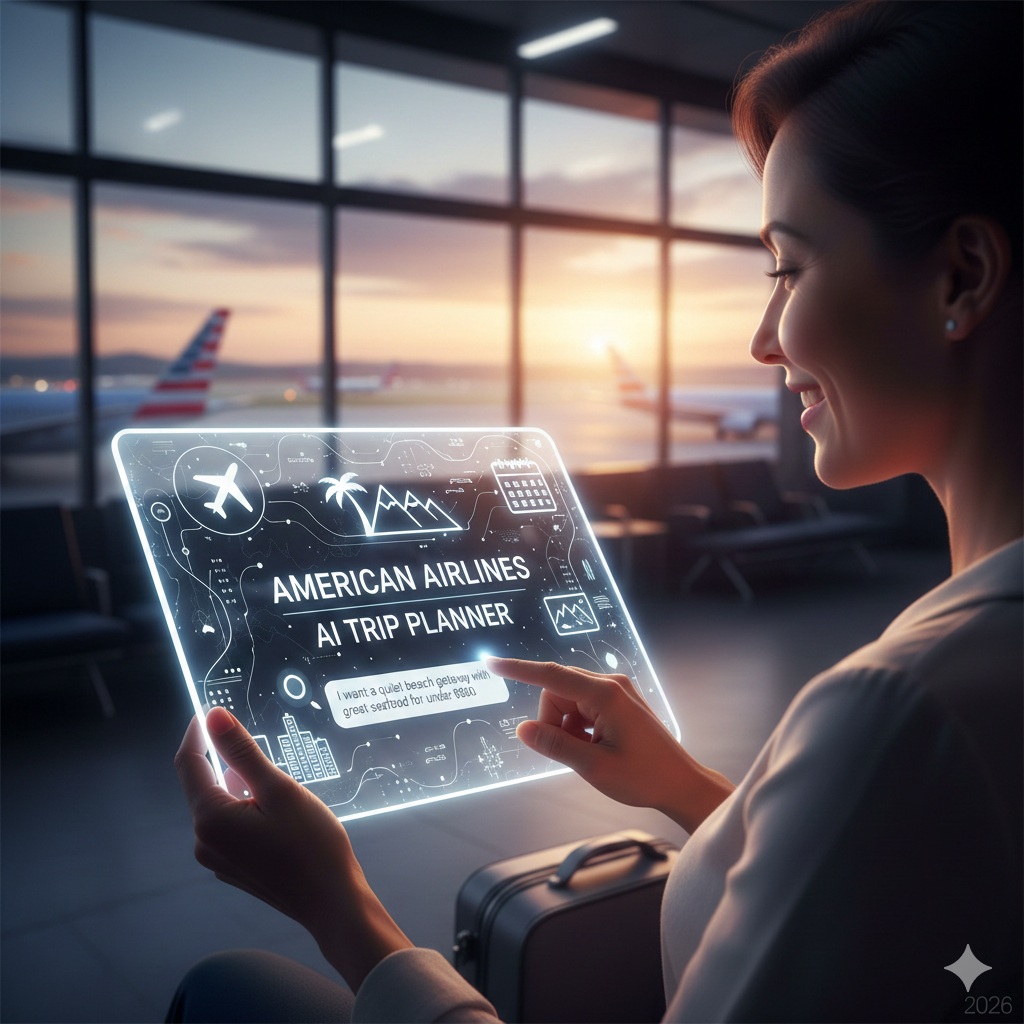
For decades, booking a flight meant staring at a rigid grid of dates, airport codes, and price tags. You had to know exactly where you wanted to go before you even started searching. But as we enter 2026, American Airlines is leading a fundamental shift in the industry. By leveraging cutting-edge generative AI, the carrier is moving away from “transactional” booking and toward “conversational” inspiration.
The cornerstone of American’s digital transformation is its new generative AI-powered planning tool. Currently rolling out across their website and mobile app, this tool allows travelers to search for trips using natural language rather than drop-down menus.
Instead of typing “DFW to CUN,” users can now input prompts like:
The AI doesn’t just return a list of flights; it synthesizes real-time fare data, current travel trends, and the user’s AAdvantage loyalty preferences to suggest curated destinations. This “experience-first” approach ensures that the platform acts more like a digital travel agent than a simple search engine.
Automation at American Airlines isn’t limited to just finding a destination. The airline has integrated AI across the entire “day-of-travel” ecosystem to remove friction at every touchpoint:
While the customer-facing tools get the spotlight, American Airlines is also using AI to ensure those booked trips actually happen on time. The airline’s “Smart Gating” technology and new “ConnectionSaver” algorithms analyze live operational data—including taxi times, gate availability, and weather—to make split-second decisions.
One of the most impressive feats is the AI’s ability to predict “at-risk” connections. The system can automatically authorize a “short hold” (usually under 10 minutes) for a departing flight if it knows a connecting passenger is sprinting to the gate, provided the delay won’t impact the rest of the network’s schedule.
Despite the heavy investment in automation, American Airlines remains vocal about the fact that AI is meant to augment their team, not replace them. By automating routine tasks like bag tagging (via next-gen kiosks that take under two minutes) and destination searches, the airline frees up its human staff to handle the more nuanced, emotional needs of travelers.
As Sam Liyanage, Vice President of Digital Customer Experience, recently noted, the goal is to translate “complexity into simple, confident choices.”
As American Airlines adds 15 new routes for the summer 2026 season—including expanded service to hubs in Phoenix and Chicago—the AI platform will play a critical role in helping passengers navigate this growing network. Whether you are looking for a solo adventure in Europe or a business trip to a new domestic hub like Lincoln, Nebraska, the AI is designed to make the process feel effortless.
The message is clear: the future of travel isn’t just about moving people from Point A to Point B; it’s about using technology to understand why they are traveling in the first place.



Get all latest content delivered to your email a few times a month.